Seawalls are among the most visible coastal structures in Florida, protecting upland properties from erosion, flooding, and storm surge—but they are only one tool in a broader shoreline-management toolbox. For property owners and communities, understanding the options, trade-offs, and regulatory framework is essential before investing in new or rehabilitated seawalls.
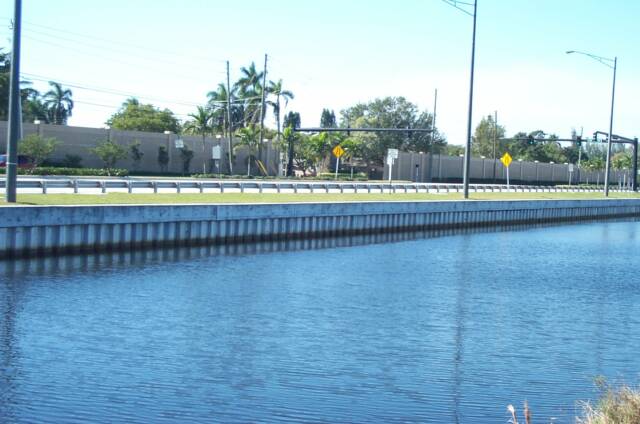
What Seawalls Do—and Don’t Do Seawalls, bulkheads, revetments, and related coastal armoring structures are designed to prevent erosion of upland property and protect buildings and infrastructure from wave and current action. When properly designed and maintained, they help reduce upland erosion and limit flooding from high tides and storm events. However, seawalls can also reflect wave energy, alter sediment transport, and affect adjacent shorelines, which is why Florida agencies scrutinize their use carefully.
In many Florida communities, older seawalls built in the 1950s and 1960s have exceeded their intended service life, with deterioration from decades of saltwater exposure, vessel impacts, and storm loading. These structures often require substantial rehabilitation or full replacement to meet modern performance expectations and account for sea level rise.
Regulatory and Permitting Context Florida’s Department of Environmental Protection regulates coastal armoring through policies that recognize the need to protect existing development while minimizing environmental impacts. On state-owned submerged lands, new seawall construction generally requires a demonstration of significant erosion, a lack of viable alternatives, and inclusion of features like riprap or vegetative stabilization where practicable. Seawalls built waterward of the Coastal Construction Control Line (CCCL) typically require special permits and detailed engineering justification.
The CCCL system designates high-risk coastal areas where storm surge, beach erosion, and sea level rise pose elevated hazards, and any construction seaward of this line triggers additional review. Local governments may overlay their own ordinances, including minimum seawall crest elevations and timelines for achieving higher standards to account for future sea level rise; for example, some South Florida jurisdictions now require new or substantially repaired seawalls to reach specified NAVD elevations by mid-century.
Material and Structural Choices Modern seawalls in Florida commonly use marine-grade reinforced concrete, precast concrete panels, or vinyl or composite sheet piles, depending on site conditions and budget. In harsh marine environments, engineers specify low-permeability concrete mixes and corrosion-resistant reinforcing steel to extend service life under continuous saltwater exposure. Where appropriate, sloped revetments with rock or geotextile systems provide more energy dissipation than vertical walls, potentially reducing scour at the toe.
Design work begins with geotechnical investigation—evaluating soil strength, groundwater conditions, and existing shoreline stability—to size piles, determine embedment depths, and assess the need for tiebacks or deadmen. Hydraulic and coastal analysis considers wave climate, storm surge elevations, and long-term shoreline change to set design water levels and freeboard requirements. Giralt Enterprises integrates these disciplines to develop seawall solutions that match each site’s specific demands rather than relying on generic section details.
Integrating “Living Shorelines” Florida’s shoreline policies increasingly encourage or require consideration of non-structural or hybrid alternatives before authorizing new hard armoring. Living shorelines—using native vegetation, strategically placed rock, and natural features—can provide erosion control, habitat benefits, and improved aesthetics while often reducing regulatory hurdles. In some cases, a combination of a lower-profile seawall with fronting vegetation or revetment offers a balanced solution that satisfies both protection and environmental goals.
Giralt Enterprises evaluates whether living shoreline elements can be integrated into each project, especially in lower-energy environments like canals, lagoons, and sheltered bays. For higher-energy open-coast sites, hybrid designs may still be possible, but careful modeling and agency coordination are essential.
Inspection, Maintenance, and Upgrades Routine inspection is critical to extending seawall service life, catching early signs of distress such as cracking, spalling, tieback corrosion, joint failure, or soil loss behind the wall. Many Florida seawalls built decades ago were not designed with modern load factors, sea level rise, or current vessel traffic in mind, making proactive assessment especially important. In some municipalities, failure to maintain seawalls to minimum elevations and conditions can trigger code enforcement or mandatory upgrades.
Giralt Enterprises offers seawall inspections, condition assessments, and rehabilitation design—ranging from cap replacement and tieback upgrades to full reconstruction. Upgrades may include raising crest elevations, adding wave-return features, improving drainage behind the wall, or converting to more durable materials, all while aligning with current codes and shoreline management policies.
Partnering with Giralt Enterprises For homeowners, associations, and public agencies, seawall and shoreline projects are long-term investments that demand rigorous engineering and careful navigation of Florida’s regulatory landscape. Giralt Enterprises brings coastal engineering expertise, permitting experience, and a focus on resilient design to help clients select the right mix of hard and soft shoreline measures for their specific site. The result is more reliable protection, better environmental outcomes, and fewer surprises over the life of the structure.
Bridge Materials for Florida’s Coastal and Hurricane Environment Bridges in Florida face a uniquely demanding environment: high humidity, salt-laden air, intense sun, heavy traffic, and recurring hurricanes. Selecting the right materials and protective systems is fundamental to achieving long service life and controlling lifecycle costs for state, county, and municipal bridge owners.
The Coastal Durability Challenge In coastal counties and over waterways, bridges are exposed to chlorides from salt spray and, in some cases, direct tidal inundation, which can rapidly corrode conventional reinforcing steel and steel superstructures. Wind events—from tropical storms to major hurricanes—impose extreme uplift and lateral loads on decks, barriers, and ancillary elements like railings and lighting systems. Climate projections indicating sea level rise and more frequent high-intensity storms further increase the importance of durable materials and robust detailing.
These realities drive Florida bridge owners and engineers to favor materials and systems that resist corrosion, maintain strength under cyclic loading, and allow for practical inspection and maintenance over decades of service.
Concrete and Reinforcement Systems Reinforced and prestressed concrete remain the backbone of many Florida bridges because they can be engineered for both strength and durability in marine environments. Marine-grade concrete mixes with low permeability are used to slow chloride ingress, often combined with supplementary cementitious materials to improve long-term performance. In aggressive exposure zones—such as tide and splash regions—engineers specify corrosion-resistant reinforcement, such as epoxy-coated, galvanized, stainless steel, or fiber-reinforced polymer (FRP) bars, to reduce the risk of steel corrosion and concrete cracking.
Precast concrete girder systems, used widely in Florida, offer quality control advantages in controlled fabrication environments and can be designed with integrated corrosion-resistant reinforcement strategies. Giralt Enterprises evaluates exposure categories, expected maintenance access, and owner preferences to select reinforcement systems that balance upfront cost against long-term durability.
Structural Steel and Protective Coatings Where structural steel girders or components are used—for longer spans or specific geometric constraints—protective coating systems are crucial in Florida’s climate. Multi-coat paint systems, metallizing, and regular recoating programs help maintain corrosion protection, especially in coastal regions with constant salt deposition. Details such as sealed box sections, drainage provisions, and minimized crevices limit water accumulation and debris retention that can accelerate corrosion.
In some situations, weathering steel is less favored near saltwater because chloride deposition can prevent the formation of the protective oxide layer that gives weathering steel its durability in other climates. For these locations, Giralt Enterprises works with owners to evaluate whether enhanced coatings, alternative alloys, or concrete superstructures provide better lifecycle performance.